
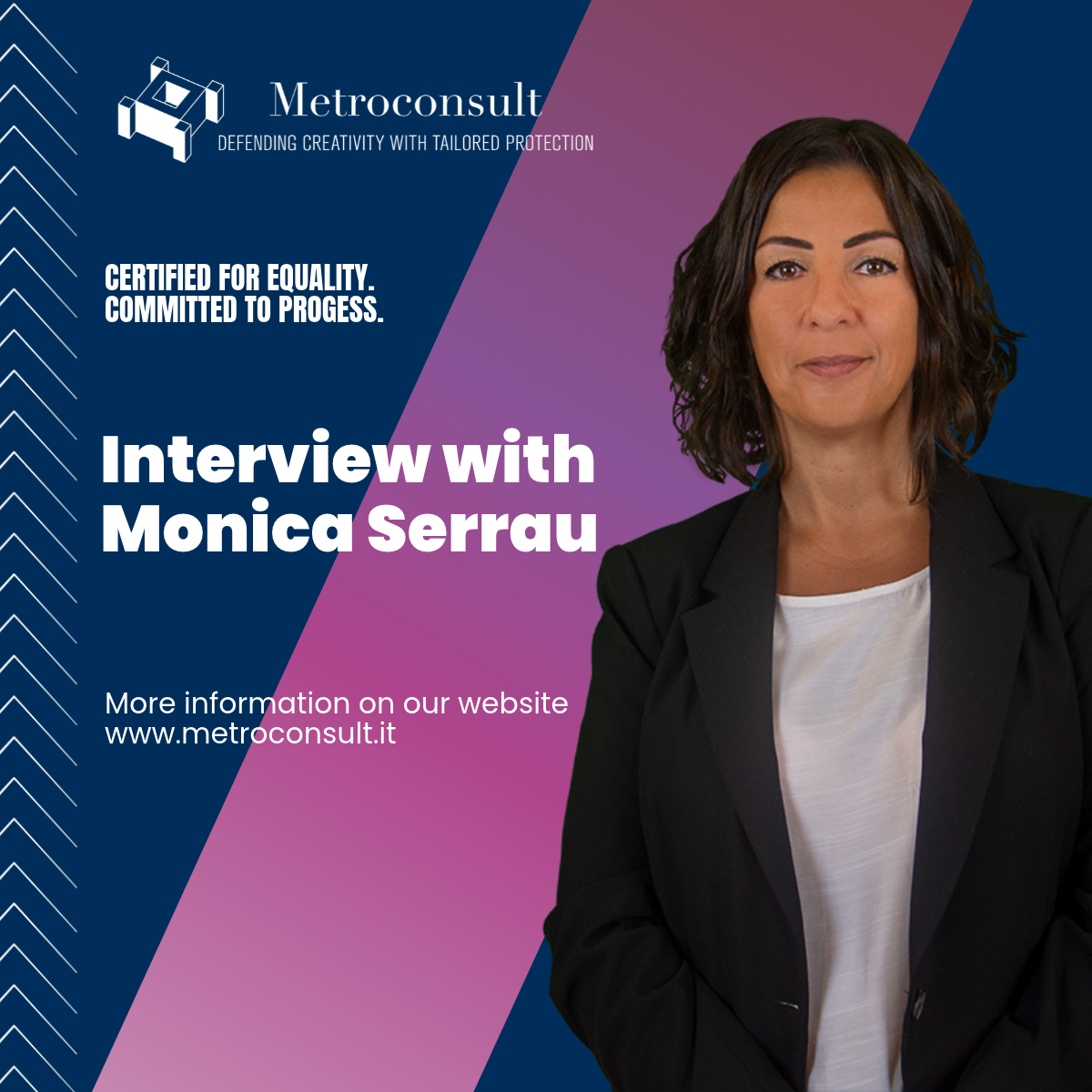
Intellectual property often sits at the intersection of technical precision and strategic vision. In this interview, Monica Serrau shares her professional journey into the world of IP, from her early exposure through administrative and procedural work to her current role leading formal procedures within the firm. She offers insight into the realities of managing complex IP processes, the importance of alignment between legal requirements and business strategy, and the challenges and progress surrounding gender representation in technical and innovation-driven environments.
What initially attracted you to intellectual property and how did your career evolve into your current role?
I initially stumbled into the field of intellectual property almost by chance, but I quickly found it fascinating — slightly intimidating at first, but still incredibly intriguing. It’s amazing to realize that almost every object we use in our life has a protection story behind it, whether through patents, trademarks or designs.
I started out in data entry and billing, and then gradually moved into supporting IP attorneys with formalities and procedural steps. Over time, I gained more expertise and qualified as a Trademark Attorney. Recently, I was promoted to lead formal procedures within our firm, which has given me the opportunity to dive even deeper into the complexities of intellectual property.
It has been a very natural evolution driven by curiosity and a genuine passion for the field.
What does a typical day look like for you today and which part of your work do you enjoy most?
A typical day in my role is a mix of coordination, detailed case management and collaboration. I usually start by reviewing emails and deadlines to understand what requires immediate attention across IP matters. Much of my time is spent managing procedures, reviewing application documents, coordinating filings and making sure everything aligns with legal and formal requirements. I regularly join team discussions to address challenges, share updates on cases and ensure that everyone involved — from colleagues to foreign agents — has what they need. Toward the end of the day, I plan the next steps and prioritize ongoing projects so that workflows stay on track.
What I enjoy most is the combination of structure and problem-solving: every case brings a specific puzzle to solve, and I like finding the most efficient way to keep complex processes moving smoothly. The variety, the precision, and the collaboration make the work both challenging and deeply rewarding.
With your EPAC certification and work around patents alongside trademarks and designs, where do you see the biggest gap between “technical documentation” and “business strategy”?
The main gap I observe is in the initial phase of expectation alignment. Companies often identify clear strategic objectives (portfolio valorization, market protection), but there’s a need for more structured dialogue between those who define the strategy and those who understand the legal and technical requirements of IP protection. Better alignment in the preliminary phase would allow orienting innovation towards solutions that are actually protectable, rather than discovering late in the process that certain developments don’t meet the protection criteria.
In technical-heavy environments (engineers R&D patent procedures) do you see gender-based credibility gaps? What helps close them fastest?
Yes, in technical-heavy environments — especially in Italy, where engineering and R&D teams are still mostly male-dominated — I sometimes see subtle credibility gaps. They often appear in early interactions, when women are expected to ‘prove’ their technical competence more than their male colleagues. This is part of a wider trend: out of every 100 patent applications, only 16 come from women. A clear sign of how underrepresented women still are in innovation and IP. Even though female participation has grown over time, gender gap analyses show that disparity in the patenting sector persists. What helps close these gaps fastest is visibility and access: mentorship programs, visible role models, efforts to reduce barriers women face in accessing funding and resources for financing research and development of inventions. And in the long term, education plays a key role. Encouraging girls to pursue science, technology, engineering and mathematics (STEM) paths and showing them female role models, challenge the outdated perception that technical fields belong to one gender. The more normal it becomes to see women in these roles, the faster the credibility gap disappears.
Conclusion
Monica’s perspective highlights the critical role that procedural expertise plays in transforming innovation into protected, enforceable rights. Her experience underscores how intellectual property is not only about technical documentation, but also about communication, collaboration, and long-term strategic thinking. By addressing credibility gaps, promoting mentorship, and encouraging greater access and visibility for women in technical fields, her reflections point toward a more inclusive and effective future for innovation and IP practice.
In 2025, Metroconsult obtained the Gender Equality Certification (UNI/PdR 125:2022) as part of its ongoing commitment to fostering an inclusive and equitable workplace culture.
In support of this initiative, under the project #CertifiedForEqualityCommittedToProgress, Metroconsult collaborated with a group of students from ESCP Business School on a project aimed at raising awareness about the role of women in the intellectual property sector.
This article, together with other content published on the Metroconsult website and on the company’s LinkedIn page, forms part of this awareness and communication initiative.